Saturday, October 02, 2010

Cape May - Monday

Our last (half) day in Cape May promised to be a washout but in fact proved the forecasters wrong and stayed dry while we were there. We headed therefore back to the hotspot to see what was around. A small flock of Red-breasted Nuthatches was foraging in the trees:


A Northern Parula was browsing for food:


Very pretty birds even without full breeding plumage:


A Northern Cardinal male chipped at us almost continuously, obviously bored with all the disturbance of his territory:


On the elm tree by the visitor centre, a Magnolia Warbler:


And nearby Cape May Warbler:


and Black-throated Blue Warbler:


Together with the Black-capped Chickadees who kept returning to the feeders maintained by the centre:

From the visitors' centre, we popped over to the Hawk Watch to see the Dickcissel again, capturing this Peregrine Falcon flying over:


and then on to our last stop, The Meadows, which held many fewer birds but one of which was this juvenile Black Skimmer:


Which very obligingly took off to give us our first opportunity to see the species feeding:


We really enjoyed our visit to Cape May. The weather hadn't been ideal either for birds or humans but we still saw a lot and met a lot of really good friendly people. We will definitely be back. An early June visit feels like a good time, that way we should be able to see some of the breeding species we've yet to see, like Prothonotary Warbler, Indigo Bunting and Blue Grosbeak to name but a few...

Labels: , ,

Cape May - Sunday afternoon

We spent an hour or so in our motel room watching the rain but it did stop so we headed back out, this time to the CMBO visitors' centre on the south-western corner of the peninsula, close to the lighthouse. It turns out this was the migration hotspot of the moment. As we approached, a large group of Swedish birders were watching a mixed flock of warblers. They pointed out a Tennessee Warbler (new species) which we watched for a while but it had gone by the time I dashed back to grab my camera.

We also saw and photographed a Red-eyed Vireo (new species):


Magnolia Warbler:
The Swedish birders told us that a Dickcissel had been seen associating with House Sparrows at the Hawk Watch, so we headed there promptly to see if we could find it.
At the Hawk Watch a Monarch Butterfly tagging demonstration was being run by CMBO naturalists, there being plenty of habitat and therefore large numbers of said butterfly - hundreds of them gathering for their own migration to Mexico:


The Dickcissel stayed in cover for a long time but did gradually emerge, these are two good photos, from about eighty, taken under leaden skies as the bird made its way out from cover:


Having enjoyed seeing and recording this bird we headed back to the CMBO centre to see if anything else was about. There we added Cape May Warbler to our list:


first a female, then a male:


A Black-throated Blue Warbler:

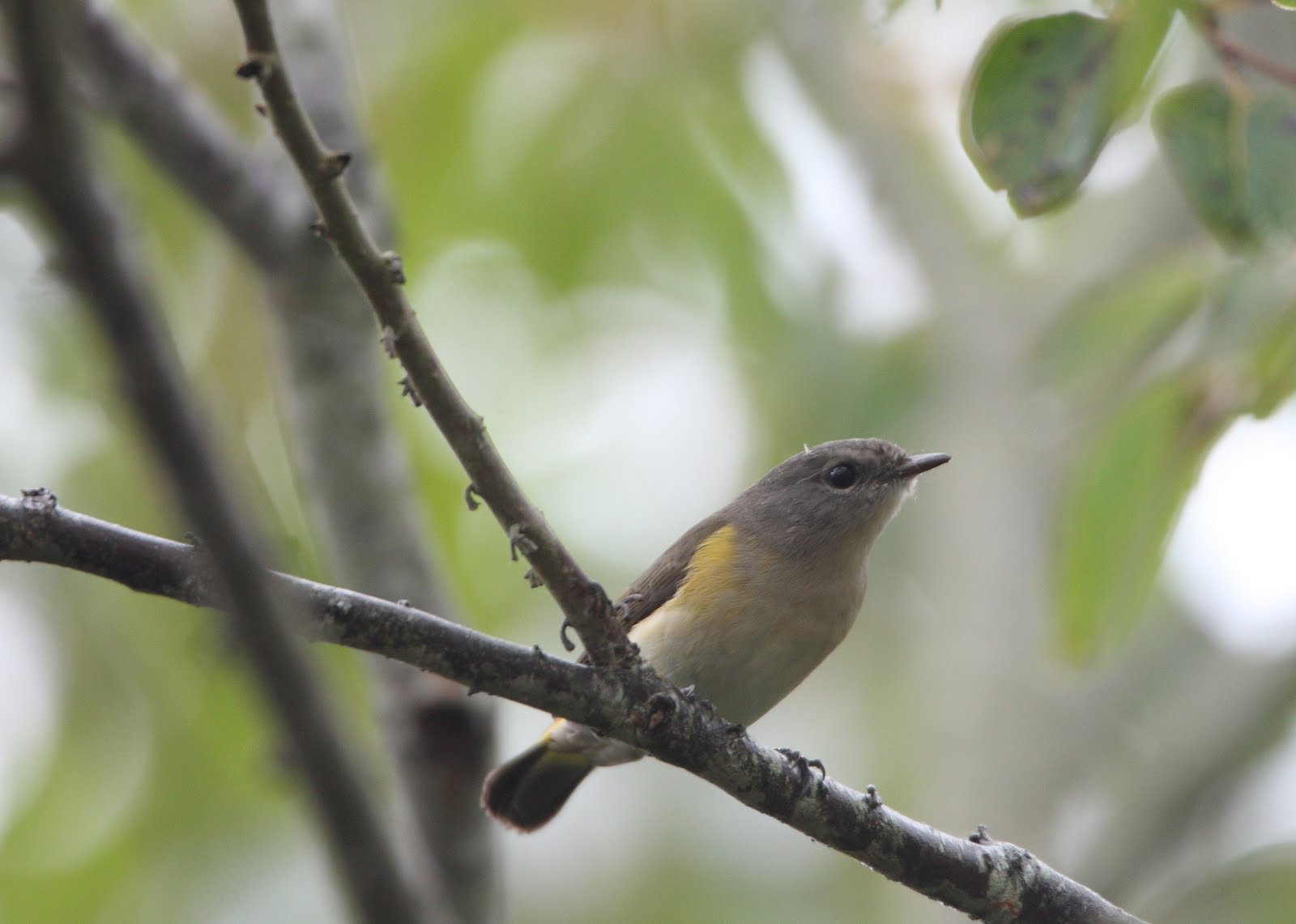
American Redstart:


And finally another Blue Jay wondering why everyone is looking at all the other birds:


This spot pepped up our visit list and helped us make the most of a very wet afternoon.

Labels: , ,

Cape May - Sunday morning

We had planned to visit Higbee beach on Sunday morning, a 'wildlife management area' (i.e. land maintained for shooting stuff), as at this time of year it's safe and has a reputation for being a prime spot for migrants to stop and rest. We arrived with plenty of time to spare, a good twenty minutes before first light and picked a spot before a row of bushes and trees to watch the dawn:


In truth we didn't see much after dawn, a combination of inexperienced eyes and the weather leading to low numbers of migrants stopping off.

We did locate what I believe is a juvenile Yellow-rumped Warbler (myrtle):


And enjoyed seeing the large numbers of Northern Flickers gathering together and then moving through the trees before gathering up again:


This formerly mystery bird has been identified (by Linda who I met in Albuquerque, thank you Linda) as a female Indigo Bunting, which is a new species!:


Magnolia Warbler:


A bird we heard before we saw it and which was initially quite tricky to spot, was this Brown Thrasher:


They have a great repertoire of calls and sounds:


A Blue Jay with a berry:


From Higbee we decided to head north to some other birding locations. We repeatedly tried to visit a CMBO visitor centre with trails and lots of different habitats, but it was closed due to being short staffed (we later found out). That was very frustrating. As an interim between attempted visits (at the time we though it might just open a bit later), we stopped off at Beaver Pond in the hope of seeing the Bald Eagle:


Instead we saw a Red-bellied Woodpecker:


Our last stop of the morning and with the weather really rolling in now, as forecast, we found Brigantine, a preserve on the outskirts of Atlantic City, seen in the distance here:


More Savannah Sparrows:


A mixed flock of waders:

Which included Sanderling:


As well as Pectoral Sandpipers, Least Sandpipers, Dunlin and Black-bellied Plovers. The preserve also hosted lots of Snowy and Great White Egrets and good numbers of Forster's Terns, including one that flew quite close by:


From Brigantine, as it started to rain, we decided to head back to the tip of Cape May and to see if we could get out from under the clouds.

Labels: , ,

Cape May - Saturday afternoon, birding by boat

The boat trip covered four and half hours in the end and there was so much to watch that rather than a chronological sequence, this one is alphabetical. First up then 'a row of Double-Crested Cormorants':


The star bird of the trip, an American Avocet:


American Oystercatcher:


Black-bellied Plover (know as Grey Plover in the UK):


Black-crowned Night Heron (this one photographed in the evening light):


Boat-tailed Grackle (new species number two):


A bridge over some of the backwaters:


You can just make out a fast approaching boat. These idiots sped past with abandon. Our boat got inundated twice, a house boat we passed fared much worse. Thoughtless idiots.

As the afternoon went on some cloud gathered, a precursor of the weather to come for the rest of the weekend:


Caspian Tern:


Clapper Rails, the second new species of the trip:


A Great Blue Heron:


A Greater Black-backed Gull feeding on an expired horseshoe crab:


An adult Little Blue Heron:


A pair of Peregrine Falcons, as you can see one (the female) is notably bigger than the male:


Royal Tern:


Tri-coloured Heron:


And the third new species of the trip a (juvenile) Yellow-crowned Night Heron:


As noted previously, we thoroughly enjoyed the trip and would recommend it to birders of all levels of expertise. Once docked we headed back to the motel for pizza and wine!

Labels: , ,